

Cancer
Cancer is the uncontrolled growth and spread of cells that arises from a change in one single cell. The change may be started by external agents and/or inherited genetic factors and can affect almost any part of the body. The transformation from a normal cell into a tumour cell is a multistage process where growths often invade surrounding tissue and can metastasize to distant sites. These changes result from the interaction between a person’s genetic factors and any of 3 categories of external agents:
- physical carcinogens, such as ultraviolet and ionizing radiation or asbestos;
- chemical carcinogens, such as vinyl chloride, or betnapthylamine (both rated by the International Agency for Research into Cancer as carcinogenic), components of tobacco smoke, aflatoxin (a food contaminant) and arsenic (a drinking-water contaminant); and
- biological carcinogens, such as infections from certain viruses, bacteria or parasites.
Most chemicals to which people are exposed in everyday life have not been tested for their long-term impact on human health.
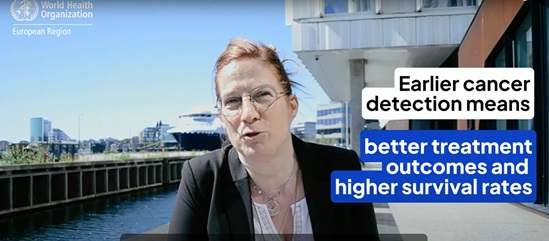
Many cancers can be prevented by avoiding exposure to common risk factors, such as tobacco smoke. In addition, a significant proportion of cancers can be cured, by surgery, radiotherapy or chemotherapy, especially if they are detected early.
Cancer is the most important cause of death and morbidity in Europe after cardiovascular diseases. With more than 3.7 million new cases and 1.9 million deaths each year, cancer represents the second most important cause of death and morbidity in Europe.
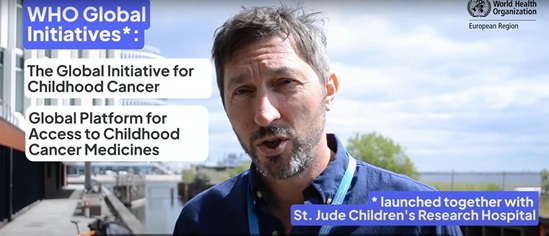
WHO/Europe assists countries to develop national programmes for cancer control. The International Agency for Research on Cancer (IARC) is the WHO body that specializes in this field. It coordinates and conducts research on causes and develops scientific strategies for cancer prevention and control.